Fendt Favorit 512 (Typ 512) specifications
The Fendt Favorit 512 C carries the internal type designation FWA 512 and was built from 1993 to 1999. With 4,542 units produced, the 512C is the most produced model in the entire Favorit 500C series. At the introduction of the series in autumn 1993, the 512C was one of two base models alongside the 514C. The 512C is available exclusively with four-wheel drive. A notable difference between early and late examples is the position of the exhaust pipe: on early models it runs through the nose of the bonnet, while on examples after the 1995 update the exhaust runs along the side of the cab.
Hydraulics and power take-off
The hydraulic load-sensing axial piston pump delivers 102 litres per minute. The rear three-point hitch is category III/II with electronic lift control (EHR) and draft force measurement via load pin on the lower links. Maximum lift capacity is 6,886 kg. The electrohydraulic differential lock acts on both front and rear axles. Up to four double-acting control valves are available, optionally with load sensing and Power Beyond.
The PTO is switchable between 540, 750, 1,000 and 1,400 rpm, independently electrohydraulically driven. An optional front PTO at 1,000 rpm is available.
Engine
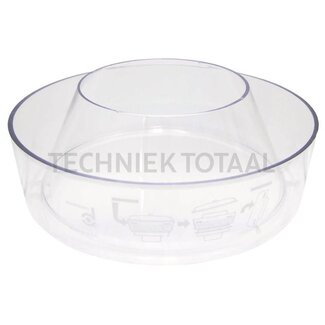
The Favorit 512 C is powered by an MWM TD 226.B-6, a water-cooled six-cylinder four-stroke turbodiesel engine with direct injection, overhead valves, pressure circulation lubrication, a Bosch VE injection pump with automatic advance unit, dry air filter with pre-cleaner, wet cylinder liners, thermostatically controlled dual-circuit cooling and a temperature-controlled viscous fan.
Bore is 105 mm, stroke 120 mm, displacement 6,234 cc. Rated power is 93.2 kW (125 hp) at 2,300 rpm. Maximum torque is 496 Nm at 1,500 rpm, with a torque rise of 28 percent. Maximum injection pressure is 850 bar. The constant power range runs from 1,900 to 2,400 rpm. Engine oil changes are only required after 500 operating hours.
Transmission and travel speed
The 512C has the Turboshift gearbox with 44 forward and 44 reverse gears. The main working range covers 24 forward and 24 reverse gears; the remaining 20 forward and 20 reverse gears are creep gears. The reversing unit is electrohydraulically pre-selectable. Standard top speed is 40 km/h, with a 50 km/h version available on request. The drive clutch is a hydraulically operated self-adjusting wet multi-disc clutch combined with a Voith fluid coupling acting as the torque converter.
Brakes, drive and steering
The brakes are hydraulic disc brakes. The portal drive on the rear axle reduces the forces in the drivetrain and creates space for larger rear tyres. The electrohydraulic differential lock acts on front and rear axles. An optional compressed air braking system was available. Steering is hydrostatically assisted. Optional full suspension packages for the front axle and cab were available.
Dimensions and weight
- Length: 448 cm
- Width: 238 cm
- Height: 282 cm
- Wheelbase: 261 cm
- Unladen weight: 5,410 kg
- Permissible gross weight: 9,500 kg
- Fuel tank: 210 litres
Standard tyre sizes are 420/70R28 at the front and 520/70R38 at the rear. Larger sizes such as 540/65R28 at the front and 650/65R38 at the rear were available thanks to the portal drive. The cab is fitted with heating as standard; air conditioning is optional.
Position in the series
The 512C is the smallest six-cylinder model in the 500C series and the most produced. The 509C, 510C and 511C models in the series have a four-cylinder engine; the 512C is the first model with six cylinders. Compared to the 514C (140 hp), the 512C produces 15 hp less but is otherwise technically identical. The popularity of the 512C reflects the well-balanced combination of power, fuel consumption and versatility that this model maintained throughout its production period.