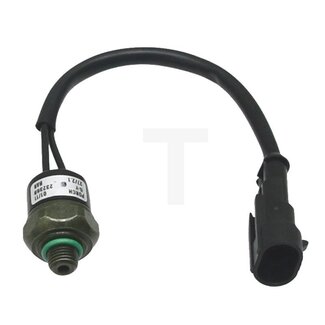
Looking for parts for your Fendt Favorit 611 (Typ 382) tractor? In this category, you'll find everything you need for the maintenance and repair of your vehicle.
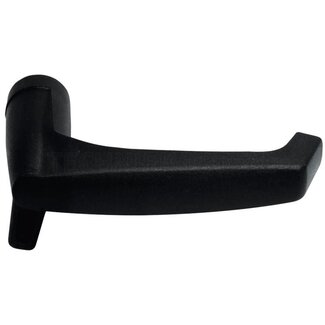
The Fendt Favorit 611 LSA carries the internal type designation T 382 and was built from 1985 to 1993 exclusively with four-wheel drive. A total of 1,433 units were produced. The 611 LSA is the successor to the 611 LS (Typ 282) and at the same time the conclusion of a development line that began in 1972 with the Favorit 611 S. The LS version with rear-wheel drive falls under Typ FWA 282.
Production ran in two clearly distinct phases. In the first phase (chassis number T 382.250, 1985 to 1987, 228 units), the engine has no turbocharger and produces 115 hp. In the second phase (chassis number T 382.211, 1988 to 1993, 1,205 units), a turbocharger was added and the combustion process optimised, raising output to 125 hp while fuel consumption fell. The 611 LSA was succeeded in the line-up by the Favorit 500C series.
The hydraulic tandem pump delivers 69 litres per minute (44 plus 25 litres) at 180 bar. The rear three-point hitch achieves a maximum lift capacity of 7,410 kg. An optional front linkage with category II three-point hitch is available with a maximum lift capacity of 3,940 kg. The permissible front axle load is 3,050 kg and the rear axle load 5,400 kg. The permissible gross weight is 8,500 kg.
The second phase (1988 to 1993) uses an MWM TD 226-B 6, a water-cooled six-cylinder four-stroke inline turbodiesel engine with direct injection into the combustion bowl of the piston. The engine is fitted with individually mounted cylinder heads, piston crown cooling, an oil cooler, Rotocap valves, a viscous fan, an inline injection pump, a multi-hole injector, a dry air filter with pre-cleaner, pressure circulation lubrication, an exhaust turbocharger with pulse charging and thermostatically controlled dual-circuit cooling. Displacement is 6,240 cc. Maximum torque is 497 Nm at 1,500 rpm. Injection pressure is 180 to 185 bar, raised to 650 bar from 1987.
The first phase (1985 to 1987) has a naturally aspirated MWM D 226.6.2 without turbocharger producing 115 hp, with a maximum torque of 412 Nm at 1,500 rpm.
The 611 LSA has a helical-cut ZF fully synchronised fine-step gearbox type T 3345 with side-mounted gear selection, offering 20 forward and 9 reverse gears. Top speed is 40 km/h in the standard version, with a 30 km/h version also available. In the 40 km/h version, the six gears in the fast range run from 3.88 to 38.41 km/h, in the slow range from 3.12 to 30.94 km/h and in the creep range from 4.71 to 27.41 km/h. From 1987, the Duospeed drive system was available as an option, along with an electronically controlled differential lock and a reversing unit.
The PTO is switchable between 540 and 1,000 rpm. An optional front PTO is available.
The braking system consists of hydraulically operated full disc brakes on the rear wheels, usable as individual wheel brakes. A propshaft disc brake acts on the four-wheel drive; when the individual wheel brake is applied, the front wheel brake disengages automatically. The parking brake is mechanically operated as an internal shoe brake. Steering is hydrostatically assisted.
Standard tyre sizes are 14.9-26 at the front and 18.4R38 at the rear. The cab is a rubber-mounted, vibration and sound-insulated safety cab with a noise level of 78 dB, air-suspended seat, digital tractor meter, fold-open front and rear windows, roof hatch, three-stage ventilation system, two-stage heating, radio preparation and height-adjustable steering wheel.
The difference between Typ 382 and Typ 282 is a recurring point when sourcing parts and when purchasing. The Typ 282 is the LS series, built from 1977 to 1984, available with either rear-wheel or four-wheel drive and producing 100 to 110 hp from a naturally aspirated engine. The Typ 382 is available exclusively with four-wheel drive, has a turbocharged engine in its second phase, a higher hydraulic pump output and higher permissible axle loads. The gearbox on both types is a ZF T 3345, but the configuration differs between phases.